
5 Top Family Resorts in Japan Compared: Choosing by Age, Season, and Budget

This site uses affiliate links; we may earn a commission on bookings.
Note: Counts such as "more than 500 properties" come from the facility data of hotels listed on Kids Stay (as of October 2026, not the total number of hotels in Japan)
menu_bookContentsexpand_more
- Why we're comparing these 5 resorts on the same footing
- A quick-reference table for the big picture
- Grand Mercure Nasu Kogen Resort & Spa: activity density takes center stage
- Grand Mercure Awaji Island Resort & Spa: baby rooms that excel for ages 0-2
- Grand Mercure Okinawa Zanpamisaki Resort: one of Okinawa's largest pools takes the lead
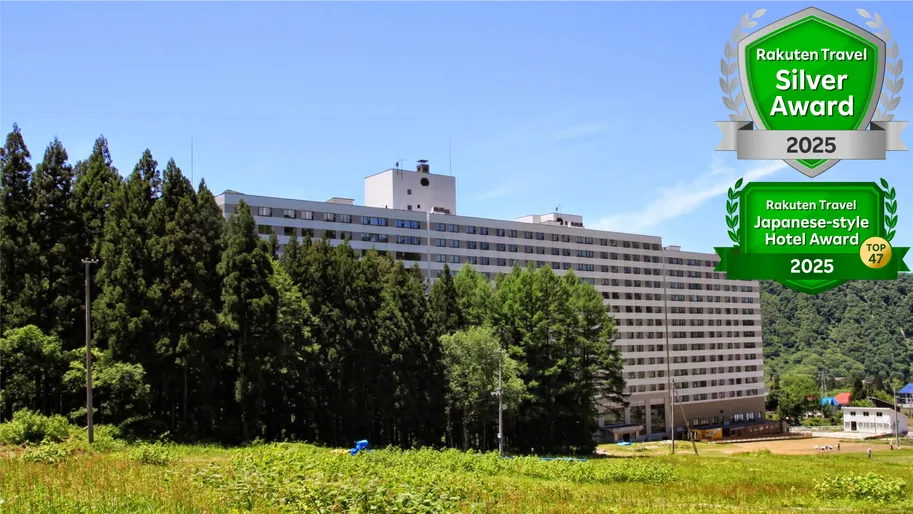
- Angel Grandia Echigo-Nakazato: "Welcome Baby" certified, with a ski slope right outside
- Hoshino Resorts RISONARE Atami: a kids' room overlooking the sea and easy Kanto access
- Recommendations by child age: ages 0-2 / 3-5 / 6-12
- Choosing by budget: sorting into "mid, " "mid-high, " and "high" bands
- FAQ: common points of confusion when comparing the five properties
- Summary: narrowing down the five properties by age x season x budget
Why we're comparing these 5 resorts on the same footing
Choosing a family resort always seems to start in the same confused place. "I heard Grand Mercure is new." "RISONARE Atami's kids' room looks amazing in photos." "Doesn't Echigo-Nakazato have some kind of baby certification?" Fragments of buzz reach your ears, but you end up booking without ever really knowing which property actually fits your child's age and the season you're traveling in.
When you're looking for a family-friendly resort hotel (a "family resort"), each destination has its own strengths, whether it's Nasu, Atami, Awaji Island, or Cape Zanpa in Okinawa, so the quickest route is to line them up and compare them by the same criteria.
This article draws on YouTube stay reviews plus each property's official site and plan details to organize five resorts along three axes: the best fit by child age, which seasons each one suits, and how to choose when you're working backward from a budget. Rather than just listing each property's strengths, we've also pulled out the caveats and the types of families reviewers said it didn't suit, so you have a reference that's harder to get wrong.

hotelOur pick
A 271-room resort hotel right in front of the ski slopes, certified as a "Welcome Baby" property. It has a kids' corner and a year-round indoor heated pool, and co-sleeping is free for ages 0-2.
A quick-reference table for the big picture
The fastest way in is a quick-reference table listing all five properties by the same criteria. Here's an overview of location, strengths, age fit, best season, and rough price range (estimated from stay reviews and official plan listings).
How the five properties divide up by age and season
| Property | Area | Strength | Age fit | Best season | Price range (1 night, 2 meals, per adult) |
|---|---|---|---|---|---|
| Grand Mercure Nasu Kogen Resort & Spa | Nasu, Tochigi | Packed activities, all-inclusive (lounge included), "Welcome Baby" certified (by room) | Age 0 to elementary school (rooms dedicated to ages 0-3) | Year-round | Mid to mid-high |
| Grand Mercure Awaji Island Resort & Spa | Awaji Island, Hyogo | Baby rooms, kids' lounge | Ages 0-2 specialist + all ages | Spring to fall | Mid-high |
| Grand Mercure Okinawa Zanpamisaki Resort | Yomitan, Okinawa | One of Okinawa's largest pools, beach right outside, "Welcome Baby" certified (select rooms) | Mainly age 3 to elementary school | Best in summer (pool open year-round) | Mid-high to high |
| Angel Grandia Echigo-Nakazato | Yuzawa, Niigata | "Welcome Baby" certified, baby food corner at the buffet, ski slope right outside | Age 0 to elementary school | Winter (skiing) / indoor heated pool year-round | Mid |
| Hoshino Resorts RISONARE Atami | Atami, Shizuoka | Climbing wall + ball pool, easy access from the Kanto area | Age 0 to elementary school (childcare from 6 months) | Year-round | High |
Broadly speaking, for babies aged 0-2, the core picks are Awaji Island or Echigo-Nakazato, with Nasu and RISONARE Atami, which both offer baby-oriented rooms, also in the running. For ages 3-5, it's Nasu or RISONARE Atami, and for elementary schoolers who want to swim, it's Okinawa Zanpamisaki.
Rates swing widely depending on timing and conditions, so it's safest to always compare actual search results for the week you plan to travel.
How to read the rest of this article
The next five sections break each property down along four angles: its strengths, the points reviews repeatedly flagged, which kind of family it suits, and what to watch out for. For an age-by-age summary, see the "Recommendations by age" and "Choosing by budget" sections later in this article.
Grand Mercure Nasu Kogen Resort & Spa: activity density takes center stage
Of the five properties, this one stands out for sheer density of activities. The short version: it's a resort with more play spaces than you can get through in a single night.
The strength of moving between outdoor and indoor play areas
On sunny days, kids can head to the outdoor "NASOBO" for a big slide and a kids' obstacle course, and on rainy or bitterly cold days, the indoor "NASOBIBA" offers wooden educational play equipment, picture books, and tabletop play. The grounds also include a lawn area called "Komorebi no Mori NASU, " and in summer a garden pool with a kids' area opens as well. Choosing a play space to suit the weather and your child's mood, and keeping that back-and-forth loop going throughout the stay, is exactly the kind of experience this property is known for.
The dinner buffet features dishes made with local Nasu Kogen ingredients, so you really feel like you're in Nasu. The regional flavor is more of a treat for the parents than the kids, and it raises the mood of the whole weekend trip.
Inside the property, the lounge is an especially easy place to spend time. With the all-inclusive plan, you can enjoy drinks and snacks matched to themes that change throughout the day, and it also makes for a nice change of scene when a child gets fussy. The plan rate includes dinner, breakfast, the lounge, the large public bath, and in-house activities (some drinks and activities cost extra).
At properties with a high density of activities, it helps to plan the next day loosely, on the assumption you won't play through everything in just one night.
Who Nasu suits and what to watch for
- Families with kids from age 3 through the early elementary grades who want to keep moving
- Anyone who wants seasonal outdoor play such as fresh spring greenery and autumn leaves
- Families driving from Tokyo and the surrounding Kanto area (public transit requires arranging a final leg)
Points to watch: it's hard to book during peak periods. There's also "Forest Baby, " a room type dedicated to ages 0-3, plus a formula preparation room on the 4th floor, so there's no need to rule it out during the baby stage.
Grand Mercure Awaji Island Resort & Spa: baby rooms that excel for ages 0-2
The standout feature of the Awaji Island property is that it offers baby rooms (Standard Twin) designed for infants and toddlers. Supplies for looking after little ones are kept in the room as standard, and YouTube stay reviews repeatedly mention something along the lines of "the baby-proofing is basically done the moment you walk into the room."
Main supplies kept in the baby room
The hotel's information lists the following supplies:
- Bed guards set up permanently in a no-shoes bed area
- Diaper-changing essentials such as a diaper trash bin and baby wipes
- A formula maker that doubles as a bottle sterilizer, a microwave, a toilet seat adapter, and a step stool
"Realizing something's missing after you've arrived and having to run to the convenience store" is one of the biggest stresses of traveling with a baby, but at Awaji Island, the in-room supplies cover much of what you need, which is its real strength. That said, no baby crib is provided, so it's a good idea to check sleeping arrangements in advance.
Who Awaji Island suits and what to watch for
- Families taking the plunge on their first-ever stay with a young child (packing gets dramatically lighter)
- Anyone based in or visiting the Kansai area (Osaka, Kyoto, Kobe) who wants to combine the stay with a drive around Awaji Island
Points to watch: rates rise noticeably during peak summer, and the pool is smaller in scale than Okinawa's. If your main goal is serious water play, Okinawa Zanpamisaki, covered next, will deliver more satisfaction.
Grand Mercure Okinawa Zanpamisaki Resort: one of Okinawa's largest pools takes the lead
The star of the Okinawa property is its pool, said to be one of the largest in Okinawa Prefecture, alongside Zanpa Beach right out front. YouTube stay reviews consistently mention things like "my kid won't get out of the pool" and "time just disappears between the pool and the beach."
According to the hotel's own information, the lazy river and the water slides have heated sections. We cover choosing a winter stay in Okinawa in our winter Okinawa with kids feature.
Designing a day's rhythm around the pool and the beach
Piecing the reviews together, a typical summer day tends to run like this:
- Eat well at the breakfast buffet, with plenty of Okinawan ingredients
- Hit the pool in the morning, before the heat peaks
- Rest in the room after lunch, or let the kids nap
- Once it cools off in the evening, take a walk or play in the sand at Zanpa Beach
- Wrap up dinner at one of the resort's own dining venues
A location where you can move back and forth between "pool, beach, pool" is rare among resorts that fully commit to the peak summer season. For more on choosing a pool-focused property, see our guide to choosing a summer hotel with a pool.
The pool is open year-round, but it truly shines in summer. In winter, expect to spend most of your pool time in the heated section.
Who Okinawa Zanpamisaki suits and what to watch for
- Families with elementary-school-age kids who can already swim confidently
- Families who can stay 2-3 nights during summer break to make the most of the pool and beach time
- Anyone who wants to combine the stay with other Okinawa sightseeing (craft workshops in Yomitan, food in Chatan, and so on)
Points to watch: because the pools are mainly outdoors, how you enjoy them changes with the season, and peak-season rates are the most likely to spike of all five properties. If you want to compare a different area within the same Grand Mercure brand, Grand Mercure Beppu Bay Resort & Spa is also worth considering.
Angel Grandia Echigo-Nakazato: "Welcome Baby" certified, with a ski slope right outside
Angel Grandia Echigo-Nakazato is known for being certified as a "Welcome Baby" property by the Miki House Child Care Research Institute (a parenting research institute run by the Japanese children's brand Miki House, which certifies baby-friendly stays). You can also browse other certified properties via our list of Welcome Baby-certified stays. The hotel has rental items such as baby bathtubs, bottle-cleaning sets, and bedwetting sheets. That said, the full set of parenting support goods is only provided in certain room types, such as the Parenting Support Room and Gran Mory, so it's a good idea to check the room type when you book.
A rare combination: a baby food corner, with a ski slope right outside
Two features stand out:
- The dinner and breakfast buffets have a permanent baby food corner and a kids' buffet corner
- A location where a ski slope sits right outside (in winter, you can walk straight out to the runs)
During the baby stage, stresses like "the restaurant menu doesn't work for my baby" or "carrying baby food everywhere is a hassle" are among the biggest headaches of traveling with kids. Having the property provide baby food through a baby food corner at the buffet can be reason enough on its own to choose a stay here. On top of that, the ski slope right outside makes this an overwhelmingly convenient property for families introducing their kids to skiing for the first time.
Baby food, baby diapers, and powdered formula are also sold at the shop inside the hotel, which makes a handy backup if you run short.
Who Echigo-Nakazato suits and what to watch for
- Families with a child from age 0 through preschool age who want to pack as light as possible
- Families with preschool to elementary-school-age kids who want to combine the trip with a first ski experience
- Anyone looking for snow mountains reachable from Tokyo by shinkansen (bullet train)
Points to watch: it doesn't match Okinawa Zanpamisaki in pool scale, and it doesn't have as many indoor and outdoor play spaces as Nasu. On the other hand, it has a year-round 20 m indoor heated pool (including a kids' pool) and a water slide, so you can enjoy water play outside of winter too. And for families who are just starting out traveling with kids, Angel Grandia Echigo-Nakazato is a strong option thanks to how thoroughly it supports the baby stage.
Hoshino Resorts RISONARE Atami: a kids' room overlooking the sea and easy Kanto access
The star of RISONARE Atami is its kids' room, with a ball pool overlooking the sea and a climbing wall, along with its location about 15 minutes from JR Atami Station by free shuttle bus. YouTube stay reviews commonly mention things like "my kid doesn't want to leave the kids' room" and "the whole stay, from check-in to check-out, works even without leaving the property."
A day that revolves around the kids' room and in-house experiences
Here's what stands out about it:
- A climbing wall for real physical activity
- A ball pool that keeps ages 3-5 entertained for long stretches
- Indoor spots for rainy days, such as Oyako no Hokuheki (a giant climbing wall) and the RISONARE Kids Studio
- Rooms and property layout designed around families with kids
"Being able to fully burn off a child's energy indoors, regardless of the weather" is a design that solves the classic problem of a short weekend trip for parents based in the Kanto area. Within the RISONARE lineup, if you want to compare something more nature-focused, RISONARE Yatsugatake and RISONARE Tomamu are worth considering as well.
Who RISONARE Atami suits and what to watch for
- Families with kids from age 3 through the early elementary grades who want to get moving
- Anyone based in Tokyo or the wider Kanto area who wants to make the most of an efficient one-night weekend trip
- Families who don't want to cancel a trip just because rain is in the forecast
Points to watch: this is often the highest price range of the five properties, and it can also be hard to book during busy periods. Because the whole experience is designed to work without leaving the property, anyone hoping to seriously sightsee around Atami may find that a bit of a waste.
Recommendations by child age: ages 0-2 / 3-5 / 6-12
Now let's reorganize the same five properties by child age. Read this alongside the quick-reference table earlier in the article.
Ages 0-2 (the baby stage)
The top priority here is how well-equipped the property is. Whether you can pack lighter or not is what makes or breaks the trip.
- Top pick: Awaji Island (in-room baby supplies in the baby room)
- Second pick: Echigo-Nakazato (baby food corner at the buffet, Welcome Baby certified)
- Other options: Nasu Kogen ("Forest Baby" rooms dedicated to ages 0-3), RISONARE Atami (baby suites, childcare from 6 months)
- Note: Okinawa Zanpamisaki is centered on its slides and large pools, so for the baby stage, plan around the 0.25 m-deep "Warabaa Pool" and the Welcome Baby-certified rooms
Ages 3-5 (from toddler tantrums through the last year or two of preschool)
The deciding factor is whether the child can keep moving without getting bored.
- Top pick: Nasu Kogen (dense activities, the outdoor NASOBO and lawn area)
- Second pick: RISONARE Atami (fully self-contained, ball pool)
- Third pick: Awaji Island (the "Shichifuku" kids' lounge, and a shallow section about 30 cm deep in the summer pool)
Ages 6-12 (elementary school)
Kids are now old enough to swim and move around on their own, so properties that go all-in on something demanding really shine.
- Top pick: Okinawa Zanpamisaki (pool plus beach)
- Second pick: Nasu Kogen (seasonal activities)
- Third pick: Echigo-Nakazato (for skiing)
Choosing by budget: sorting into "mid, " "mid-high, " and "high" bands
The five properties spread out quite cleanly by price band, so it's also worth working backward from your budget.
Candidates and characteristics by budget band
Here's an organization based on rough ranges (1 night, 2 meals, per adult) estimated from reviews and official plan listings. Note that these swing widely by season.
| Budget band | Property | Characteristic |
|---|---|---|
| Mid (value-focused) | Angel Grandia Echigo-Nakazato | Great value in this band given the baby support and ski-slope location |
| Mid to mid-high | Grand Mercure Nasu Kogen | A price that feels justified given the density of activities |
| Mid-high | Grand Mercure Awaji Island | Carries a premium for the specialized baby room |
| Mid-high to high | Grand Mercure Okinawa Zanpamisaki | Spikes at peak summer, drops in the off-season |
| High | RISONARE Atami | You're paying for the fully self-contained experience |
When deciding by budget, keep two decision points in mind: "if you can travel during the off-season, aim for a higher-grade property's slow period," versus "if you're locked into peak season, a mid-band property can still deliver strong satisfaction."
How to think about it when you can only travel in peak season
If your family's schedule is fixed to peak periods, the conclusion from comparing all five is that you're often better off not forcing your way into a pricier band, and instead making the most of skiing or the year-round indoor heated pool at Echigo-Nakazato, or the indoor and outdoor play spaces at Nasu.
If you're not familiar with the concept of a stay where meals and activities are bundled into the room rate, browsing our list of all-inclusive properties will help you get a feel for this budget comparison.
FAQ: common points of confusion when comparing the five properties
Of the five properties, which is best for a first-ever stay with kids?
For the baby stage (ages 0-2), it's Awaji Island or Echigo-Nakazato. Awaji Island lowers the bar for a first stay through its baby room equipment that cuts down on packing, while Echigo-Nakazato does it through its Welcome Baby certification and the baby food corner at its buffet, which eases mealtime worries. For a first stay around age 3, RISONARE Atami also works well, since it's fully self-contained and works even on a rainy day.
Where should we go if we want to combine the trip with snow play or a first ski experience?
Of the five properties, the one that handles both snow play and skiing most easily is Echigo-Nakazato. In winter, the hotel says a snow play area called "Yuki Yuki Land," where even small children can play, is open daily on the slope in front of the hotel. If you want to give your child a first ski experience, there's the "Piyokko Kids Lesson" for guests aged 3 to 5 (paid, reservation required by the day before), and being able to walk straight out to the slopes makes getting around that much easier.
If summer pool time is the goal, is Okinawa Zanpamisaki the only choice?
If you want to go all-in on the pool, Okinawa Zanpamisaki is the strongest choice. That said, rates spike during peak summer. If you want water play closer to Tokyo and the Kanto area, RISONARE Atami, which has a toddler pool (usable with swim diapers), is also an option. Keep in mind that its price range is on the high side.
How do the three Grand Mercure properties differ from each other?
Nasu is about activity density, Awaji Island is about its baby rooms and kids' lounge, and Okinawa Zanpamisaki is about the pool and beach. Each one's centerpiece is completely different. Assuming they're similar just because they share a brand is where comparisons go wrong. For a more detailed breakdown of the three, see our comparison of the three Grand Mercure resorts.
Is there anything to watch out for at properties with lots of activities?
The classic pattern is "the kids keep playing right up until checkout, and packing up and leaving turns into a scramble." Even after they seem satisfied with outdoor play, they tend to head back inside and keep playing in the indoor play area, so it pays to keep the next day's schedule loose. At properties with more activities, how much slack you build into your schedule has a big effect on overall satisfaction.
With the all-inclusive plans at the three Grand Mercure properties, is there a risk of "not getting as much use out of it as expected"?
Yes, there is. Especially with a one-night stay, you're likely to miss out on some combination of the lounge, activities, and meals. Planning around 2 nights makes it much easier to get your money's worth out of the all-inclusive experience.
Are there all-inclusive family resorts in Japan?
Yes. Among these five, the three Grand Mercure properties in Nasu, Awaji Island, and Okinawa Zanpamisaki follow that model. That said, which of meals, the lounge, the large public bath, and in-house activities are included, and where extra charges begin, varies from property to property. It's a good idea to check each property's official information on what's included before you book. For a broader look at all-inclusive stays across Japan, see why all-inclusive is the best choice for families with kids.
Where should we go for a beach resort with kids?
Among these five, it's Grand Mercure Okinawa Zanpamisaki, with Zanpa Beach stretching out right in front. Since you can move back and forth between the pool and the beach, it suits families with kids mainly from age 3 through elementary school who want to go all-in on summer water play. If you're traveling with ages 0-2, planning around the 0.25 m-deep "Warabaa Pool" and the select rooms certified as Welcome Baby stays will give you peace of mind. If a beach is your goal within Japan, Okinawa has the deepest selection: among the properties we list, 117 of the 267 hotels near a beach nationwide are in Okinawa Prefecture (62 of them on the main island of Okinawa). There are also options along the coasts of the Kanto region (59 properties) and the Tokai region (29 properties). We cover the differences between areas in our guide to the best family hotels in Okinawa.
Summary: narrowing down the five properties by age x season x budget
Looking at all five properties side by side, what stands out is that each one's centerpiece is completely distinct. Rather than asking "which one is best, " the conclusion that's hardest to get wrong is choosing based on which one best matches your child's age, the season you want to travel, and your budget.
To sum it up simply one more time: ages 0-2 point to Awaji Island or Echigo-Nakazato; ages 3-5 point to Nasu or RISONARE Atami; elementary schoolers who want to swim point to Okinawa Zanpamisaki; a first ski experience points to Echigo-Nakazato; and a weekend trip with rain in the forecast points to RISONARE Atami. Drawing this rough map first, then layering your dates and specific conditions on top, is the fastest route to a decision.
And one thing holds true across all five properties: the more activity-dense a property is, the happier your family will be booking 2 nights instead of one. With just one night, you won't get through everything, and the family is often left saying "we wanted to do that too." For a family resort you're going out of your way for, booking enough nights to actually play it all out is the single best way to boost your satisfaction.
Find hotels that match this article
Find hotels that match this article
Related articles


Seasonal collections
Christmas With Kids in Japan
Book December weekends early. Three ways to spend it: city hotels, dinner-included resorts, or snow and hot springs
Winter Onsen With Kids
Winter onsen towns from north to south, where an in-room bath, a reservable private bath and meals in your room mean you never have to go out
Winter Break With Kids
Travel in the first or second half of winter break and skip the New Year crush. Choose by snow play, hot springs, the warm south, or city playgrounds
Autumn Leaves With Kids
Peak color timing, plus hotels in autumn leaf areas you can manage with a baby or toddler, from Hokkaido to Kyushu
Autumn Farms and Harvest
Hotels with farm activities and animal encounters, plus the areas that make the best base for fruit picking and harvest days, from Hokkaido to Kyushu
Autumn Cottages and Glamping
No one else to worry about, at your children's own pace. Areas with self-catering villas, cottages, and glamping, from north to south