
Japan With a Baby: Your First Trip and Hotel Stay

This site uses affiliate links; we may earn a commission on bookings.
Note: Counts such as "more than 500 properties" come from the facility data of hotels listed on Kids Stay (as of October 2026, not the total number of hotels in Japan)
Yes, you can travel in Japan with a baby, and the first hotel stay is usually lighter work than it sounds. The easiest window is roughly 3 to 5 months old, once your baby's neck is steady but before they can move around a room on their own. If reaching Japan means a long-haul flight, though, that leg is easier on parents from around 6 months, so weigh the flight as well as the hotel stay when you pick dates. The formula that works is simple: keep the travel time short, stay one night rather than three, and book a property that already knows what a baby needs, because Japanese family hotels lend cribs, give you a way to warm formula and baby food, and run private baths in a way that removes most of the guesswork.
This guide walks through when to come, how your baby's age in months changes the plan, how to choose a hotel or ryokan, what an onsen visit actually looks like with a baby, how to move around the country, what to pack, and how to run your first afternoon in the room.
Find Welcome Baby certified properties
Find Welcome Baby certified properties
On Kids Stay you can filter for Welcome Baby certified properties right from the start. Just choose an area and the size of your group to line up properties suited to a baby's very first night away.
menu_bookContentsexpand_more
When to visit Japan with a baby
The question everyone hits first is how old a baby should be. Each stage in months has clear strengths and weaknesses, so start there rather than with the destination.
The 3 to 5 month window is the lightest
Once your baby's neck is steady and feeding rhythms have settled, ages 3 to 5 months make a surprisingly low bar for a first stay. Rolling over is still rare, so the risk of a baby moving around unsupervised in a hotel room is small. Keep the journey to about two hours by car with one stop for a feeding and a diaper change, and many families find their baby sleeps through the drive and arrives in a good mood.
The baseline rule is to avoid travel before the one month checkup. The immune system is still developing and a baby handles temperature swings poorly at that stage. Waiting until at least after the rotavirus vaccine at around 2 months gives noticeably more peace of mind.
Skip travel before the one month checkup. Ages 3 to 5 months, once the neck is steady, is the sweet spot.
Timing worth skipping, whatever your baby's age
- Within 2 to 3 days of a vaccination, because of the risk of a fever reaction
- The extremes of midsummer, late July through August, and deep winter, January to early February
- Japan's domestic travel peaks: Golden Week in early May, Obon in mid August, and the New Year period, when family rooms sell out and trains are packed
- Any stretch when an older sibling or a relative has cold symptoms
- Right after a move or any change that has disrupted your baby's routine
Overlapping with one of these can turn a holiday into a trip spent looking after a sick baby. Travel when everyone is in the best possible condition is the one rule worth being rigid about.
How your plan changes month by month
Split the first year into four blocks of three months and the decisions get much easier, because how long a baby tolerates travel and what you need from a hotel are completely different at each stage. If your baby was premature or has an existing condition, talk to your doctor before you fix dates.
1 to 3 months: travel time is everything
Even after the one month checkup, feeding intervals are short and temperature regulation is immature. The difficulty of the trip is set almost entirely by how short you can make the journey. One night somewhere about an hour away by car, with no sightseeing planned and the stay itself as the destination, is realistic. If you're flying, each airline sets its own minimum age for babies, so check its rules before you book. From the property, the two things to confirm are a crib rental and a kettle for making up formula. Being able to handle night feeds and changes entirely inside the room is what decides how wrecked you feel the next morning.
4 to 6 months: the easiest entry point
The neck is steady, feeds and naps are predictable, and your baby still can't move around on their own. Packing is lighter than it will be once solids start, which makes this the simplest stage of the first year to plan around. One night at a hot spring town or a highland resort within two hours by car is the classic shape. If you're thinking about a first onsen, the deciding factor is whether the property has a private bath, because babies who are not yet potty trained are usually not allowed in the communal baths. Kids Stay lists over 530 properties with a private bath, and over 200 with a baby bed in the changing room, which is the detail that makes getting a baby dressed afterward manageable.
7 to 9 months: meals become the question
Once solids are established and sitting is stable, your attention shifts from travel to food. Decide in advance whether you'll eat in the main dining room or in your room, and the property shortlist writes itself. Travel of around three hours by car is workable at this stage. Look for baby food served by stage, which over 480 listed properties offer, and in-room dining, available at over 2,140. If you're bringing your own pouches, ask at booking whether staff can warm them.
10 to 12 months: shorter travel, longer stays
Pulling up to stand and cruising along furniture mean much less tolerance for sitting still, so switch the ratio to short travel and a long stay. One night at a property where you can happily spend the whole afternoon indoors beats a route that strings together three sights in a day. In-room dining still earns its keep, and a private bath matters even more once your baby wants to stand up in the water. Crib rentals are available at over 600 listed properties, but babies this age start climbing rails, so ask at booking whether you can sleep them on a futon or a low bed instead.
Choosing a hotel or ryokan for a baby in Japan
It isn't an exaggeration to say the property decides 80 percent of how the trip goes. Here are the criteria in three tiers.
Must-have: without these, a first stay gets hard
| Condition | Why |
|---|---|
| A no-shoes room, meaning tatami, a tatami corner, or carpet | Hygiene during the crawling stage |
| A crib or a low bed | Preventing falls |
| A microwave in the room or on the floor | Warming formula and baby food |
| Bottle sterilizer rental, or permission to bring your own | Hygiene |
| A non-smoking room | Protection from secondhand smoke |
The shoes policy inside the room is the one overseas parents miss most often. In Japan you take your shoes off at the door of a tatami room, but many Western style rooms are shoes-on throughout, and some suites are split, with a shoes-on bedroom and a shoes-off living area, which quietly shrinks the space your baby can crawl in. It's normally spelled out on the room description page or the facilities guide of the property's official site, so check before booking.
Strongly recommended: these change the quality of the stay
- A private bath or an in-room bath, since most properties don't allow babies who aren't potty trained in the communal bath
- A stroller to borrow inside the building, which cuts what you have to carry
- A nursing room or multipurpose room on the same floor
- A private or semi-private dining option
- Staff who ask your baby's age at check-in, which tells you the operation is used to babies
Of these, the private bath matters most if you're set on a ryokan, a traditional Japanese inn with tatami rooms and set meals. Musubi no Yado Airinkan, for example, has three private baths bookable in 45 minute slots at no extra charge. A structure like that is what lets a whole family have their first onsen together.
Nice to have: what makes a stay memorable
- Welcome Baby certification, awarded under the Mikihouse Child Care Research Institute standards
- A baby food menu split by stage
- Sample diapers provided or sold on site
- A baby bath chair and baby soap kept on hand
- A baby bathtub to borrow
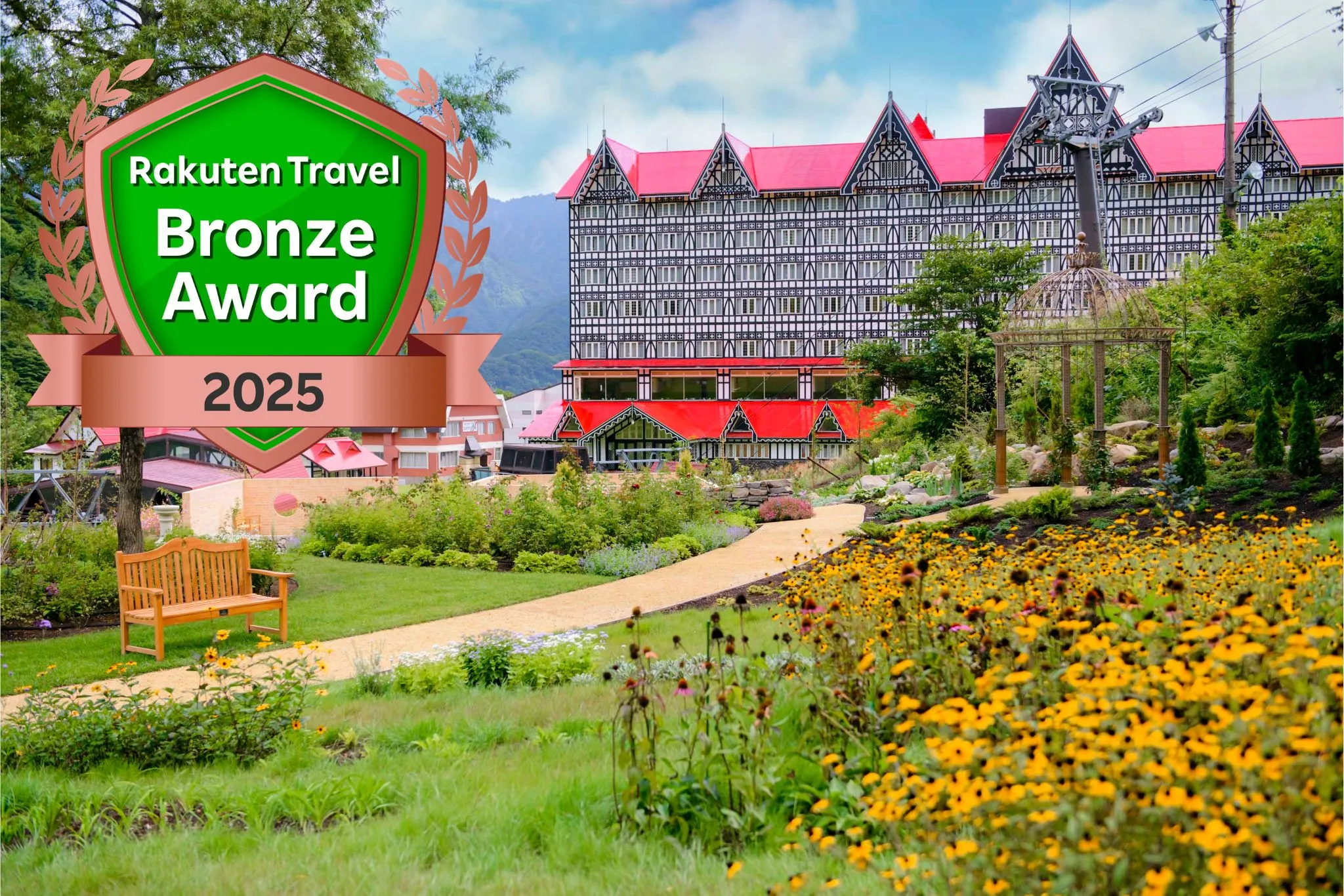
Welcome Baby certification is the single most useful filter for an overseas family, because only properties meeting at least 70 of its 100 criteria, covering both the physical side such as facilities and the human side such as hospitality and service, can earn it. Certified properties are scattered across the country, including Angel Grandia Echigo-Nakazato, Minakami Kogen Hotel 200, and Ikenotaira Hotel, so browsing Welcome Baby certified properties before you lock a destination is a fast way to narrow the map.
Onsen with a baby: what actually happens
An onsen is a natural hot spring bath, and in most properties the communal baths are shared, gender separated, and entered with no swimwear. The practical rule for families is that babies who are not yet potty trained are usually not admitted to the communal bath. That isn't a snub, it's a hygiene rule, and it's why the private bath question decides your ryokan shortlist.
Your options are an in-room bath, which many family rooms have, or a private bath you reserve for a set slot, as at Airinkan's 45 minute system. Over 530 listed properties have a private bath, and over 200 keep a baby bed in the changing room, which is the difference between dressing a wriggling baby on a bench and doing it on a proper surface. Our baby's first onsen guide covers water type, temperature, and how long to stay in, and is worth reading before a hot spring stay.
Confirm the room's shoes policy and the bath setup, in-room or private, before you book.
Getting around Japan with a baby
Whether you have a rental car or a rail pass, the same trick applies: line the journey up with nap time. Families who leave right after a morning feed often get a solid two hour nap in the car. Leaving during a fussy pre-nap window means crying in the back seat and a frayed driver.
| Time | Action | Point |
|---|---|---|
| 10:00 | Feed and change at home or the hotel | Set off with a full baby |
| 10:30 | Depart | Ride the nap |
| 12:00 | Stop at a highway service area | Feed, change, and eat something yourselves |
| 13:00 | Back on the road | Keep the nap going |
| 14:30 | Arrive near the destination | Drive around lightly until check-in |
| 15:00 | Check in | Safety check the room and unpack |
By train, book a shinkansen car with a multipurpose room, which is car 11 on the Tokaido Shinkansen between Tokyo, Kyoto, and Osaka. Staff can open it for feeding, and it makes changes and crying far easier to handle. Note that commuter trains get very crowded at rush hour and some stations involve stairs, so a carrier is worth having even if you also bring a stroller. If your baby won't settle in the car, plan around a break every 30 minutes rather than pushing through. If you're adding a domestic flight inside Japan, JAL and ANA both accept babies from 8 days old under each airline's policy as of April 2026, and you'll want a feed or a bottle ready for takeoff and landing. For a long-haul flight, aiming for around 6 months or older makes the journey noticeably easier on parents.
For the day-to-day side of getting around (changing facilities, IC cards, buses, eating out), The Real Japan's 12 tips for exploring Japan with a baby is a good companion to this.
Packing for Japan in three tiers
The usual complaint is that packing lists are too long to be useful. Sort everything into bring from home, buy in Japan, and rent from the hotel and the pile shrinks fast.
Bring from home
| Category | Item | Note |
|---|---|---|
| Documents | Passport, travel insurance policy details, a note of any medication | Keep the policy number reachable offline |
| Hygiene | Diapers, roughly 10 to 12 per day | Extra on travel days |
| Hygiene | 2 packs of baby wipes | Also for hands, faces, and tables |
| Hygiene | Plastic bags for diapers and soiled clothes | About 5 zip bags |
| Feeding | Your baby's usual bottle and nipple | Prevents sudden refusal |
| Feeding | Liquid or cube formula | Backup for nights and journeys |
| Clothing | 3 to 4 changes per day | Spit-up and spills |
| Sleep | The usual swaddle or sleep sack | Keeps the bedtime routine intact |
| Emergency | Your baby's usual fever reducer | Brands and dosing differ in Japan |
| Emergency | A thermometer you can read at a glance | Not the moment to learn a new scale |
The usual bottle and the usual swaddle are the two things with no substitute. Babies are sensitive to change, and a borrowed bottle is often refused outright. It's common for families to try the hotel's bottle, get nowhere, and fall back on the one from home.
Worth adding if you have room: a carrier with a hip belt, a stroller rain cover, one or two favorite toys, two bath towels that double as a mat or a nursing cover, a silicone bib, a baby spoon, and a small night light. The night light sounds trivial and isn't: a phone flashlight is bright enough to wake a baby fully, while a battery powered light from a 100-yen shop, the cheap variety stores you'll find near most stations, is plenty.
Buy it in Japan
- Diapers and wipes, at any drugstore or convenience store. Sizes are marked by the baby's weight in kilograms rather than by age, so bring your baby's weight with you
- Liquid formula, stocked by many convenience stores
- Baby food pouches and jars, at large supermarkets such as Aeon
- Baby cotton swabs and nail scissors, at drugstores
Consumables are easy to replace almost anywhere in Japan, so pack only a minimum of them, since you can always buy more if you run out.
Rent from the hotel
Cribs and bed guards, an in-house stroller, a bottle sterilizer, a lidded diaper bin, a baby bathtub and bath chair, and at Welcome Baby certified properties, baby soap and shampoo. Packing what you could have borrowed is what doubles your luggage for nothing. Email or call the property as soon as the booking is confirmed and request the equipment by name. At a property like Hotel Epinard Nasu you can submit the items you need through a form before check-in and simply collect them on arrival. Our family packing checklist sets the full list out by age.
Your first hotel day, hour by hour
Knowing what to do in what order once you reach the room takes most of the nerves out of a first stay.
The 10 minute safety routine at check-in
Before you head out or down to the bath, spend ten minutes on the room.
- Tuck power cords and extension cords behind furniture, 2 minutes
- Move the bin and anything on low shelves out of reach, 1 minute
- Adjust the bed guard and check the gaps, 2 minutes
- Locate the microwave and bottle sterilizer, 2 minutes
- Check the emergency exit and nearest stairwell, 1 minute
- Decide where feeding and changes will happen, 2 minutes
Once your baby is crawling or pulling up, add corner guards to any low table and move the kettle and hair dryer up high. Taking those first ten minutes seriously is the best investment you'll make in the whole stay, because skipping it is what leads to standing on things during a 3 am change. Rooms with tatami or low beds, like the low bed rooms at Hotel Green Plaza Karuizawa, cut the fall risk further by keeping everything at floor level.
Take the earliest dinner slot
Japanese family hotels and ryokan usually run dinner in fixed sittings, and the first one, often around 5:00 pm, is the right choice with a baby. The room is emptier, you start before your baby's hunger peaks, and you still have time for a bath and bedtime afterward. The other families in that sitting are in exactly the same position, which makes for a forgiving atmosphere. At a buffet, the rule is that parents go up one at a time, because standing up together guarantees a protest. Mention at booking whether you'll bring baby food and whether it can be warmed.
The sleep setup
- Keep the air conditioning from blowing directly onto the crib
- Aim for 22 to 24°C and 50 to 60 percent humidity
- Clip the blackout curtains shut where they gap, or you'll meet the sunrise at 5 am
- Recreate the usual bedtime routine with the same swaddle or sleep sack
- Stuff a blanket into any gap between the bed guard and the wall
Being able to run your baby's normal bedtime routine, a book or a song, can shift how fast they settle on night one by half an hour or more. Whether two beds can be pushed together against a wall, or futons laid out in a tatami room, varies by property, so families who co-sleep should raise it at booking.
FAQ
Will nighttime crying disturb the room next door?
At a property that markets itself to families, your neighbors are usually other families, and the atmosphere is forgiving. If you're still worried, ask for a corner room in the booking notes and mention your baby's age. Some properties will deliberately place another family next to you. Bringing the same lullaby or white noise you use at home also makes the change of environment less obvious, which sometimes cuts the crying on its own.
What if our baby gets sick in Japan?
Before you travel, search Google Maps for the pediatricians and the night-time emergency clinic nearest your hotel, screenshot the top few, and confirm at least one hospital within about 30 minutes by car. Save them offline. Bring your baby's usual fever reducer, since you may be hours from a clinic at night. The Japanese public system that lets residents skip paying upfront does not apply to visitors, so keep your travel insurance details reachable, and check what your credit card already covers. If you're unsure at night, the front desk can often point you to the local emergency consultation line.
Does a baby cost extra at a Japanese hotel?
At most properties, children under 3, or sometimes under school age, sleep in a parent's bed at no charge. Charges appear when you add a bed, a meal, or a futon set. Stating plainly at booking that your baby will co-sleep with no meal and no extra bedding is the way to avoid a surprise at the desk. Note that Japanese properties commonly price children in age bands rather than as a flat per-room rate, so give exact ages when you book.
Hotel or ryokan for a first trip with a baby?
As a rule of thumb, hotels are better equipped, ryokan are more flexible about meals. For a first stay with a baby, a hotel is the lower risk choice because cribs, sterilizers, and microwaves are more consistently available. Save the ryokan for the trip after, or pick one with a private bath and in-room dining, which is the combination that makes a ryokan work with a baby.
How long should the first stay be, and when should we book?
One night is the right length. Multiple nights add repacking, a second meal plan, and nap rhythms to manage all at once. Step up to two nights only after one has gone well. Book 1 to 2 months ahead, because the room types that suit babies, tatami rooms, low beds, and rooms with a private bath, are the first to sell out.
When you're ready for the next stage, our tips for traveling with a toddler aged 1 to 3 picks up where this leaves off.
Find Welcome Baby certified properties
Find Welcome Baby certified properties
Related articles


Seasonal collections
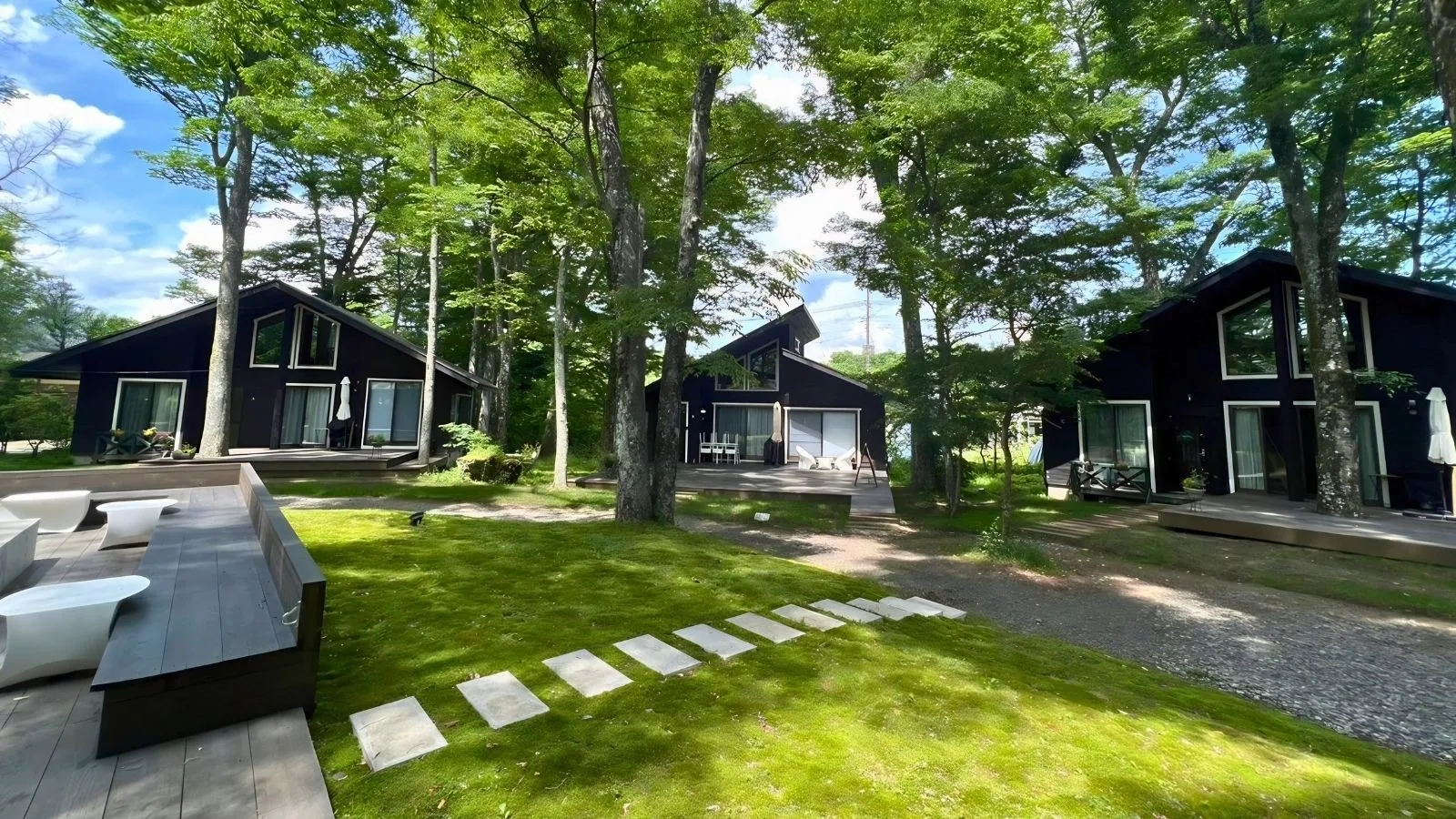
Autumn Cottages and Glamping
No one else to worry about, at your children's own pace. Areas with self-catering villas, cottages, and glamping, from north to south
Winter Onsen With Kids
Winter onsen towns from north to south, where an in-room bath, a reservable private bath and meals in your room mean you never have to go out
Christmas With Kids in Japan
Book December weekends early. Three ways to spend it: city hotels, dinner-included resorts, or snow and hot springs
Winter Break With Kids
Travel in the first or second half of winter break and skip the New Year crush. Choose by snow play, hot springs, the warm south, or city playgrounds
Autumn Leaves With Kids
Peak color timing, plus hotels in autumn leaf areas you can manage with a baby or toddler, from Hokkaido to Kyushu
Autumn Farms and Harvest
Hotels with farm activities and animal encounters, plus the areas that make the best base for fruit picking and harvest days, from Hokkaido to Kyushu