
Car Seats in Japan: Taxis, Rental Cars, and What to Bring

This site uses affiliate links; we may earn a commission on bookings.
Japanese taxis do not come with child car seats as standard, and legally they do not have to: under Japan's traffic rules, taxis and buses are exempt from the child seat requirement for children under 6. Rental cars are a different story. Whoever drives a rental car in Japan must put any child under 6 in a proper seat, and rental companies offer seats as a paid add-on that you should reserve together with the car. So whether you haul your own car seat onto an international flight comes down to one question: which cars will your children actually ride in once you land?
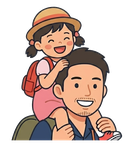
The answer depends on which car you ride in
Every car ride on a family trip in Japan falls into one of three groups. Rental cars: reserve a child seat add-on when you book. Taxis and buses: legally exempt from the car seat requirement. Relatives' cars or long road trips in a private car: bring your own or use a portable option. If you are unsure, start by listing every vehicle your child will ride in during the trip. That list tells you exactly what to arrange.
The legal baseline in Japan
Japan's Road Traffic Act says that when a driver carries a child under 6, the driver must have the child use a child seat (the legal term is a child restraint device). The duty falls on the driver. That applies to a parent driving a rental car, and equally to grandparents or relatives in Japan driving their own car.
What to arrange for each type of vehicle
| Vehicle you ride in | Required for under 6? | How to arrange it |
|---|---|---|
| Rental car or car share | Yes | Reserve a seat add-on at booking, or bring your own |
| Taxi, city bus, tour bus | Exempt | Not required. Bring a portable option if you want one |
| Relatives' or friends' car | Yes | Bring your own, or have a baby equipment rental company deliver one |
| Hotel shuttle | Depends on how it is run | Ask the hotel when you book |
Hotel shuttles sit somewhere between the three groups, so they need checking case by case. It is also the row people miss. The exemption covers vehicles operated as a paid passenger transport business. A shuttle a hotel runs with its own vehicles is not necessarily treated the same way. The taxi section below goes into this.
In the comments under a Japanese YouTube video about car seats, one viewer wrote that they live overseas, cannot bring their seat along, and were considering buying another one in Japan. It is a common dilemma: every time the type of car changes between home and a trip, the same question comes back.
List every vehicle your child will ride in. Sorting each one into rent, bring, or not needed takes one pass.
Rental cars in Japan: reserve the child seat with the car
Rental cars are the most common way families end up driving in Japan. Almost all of the major rental companies rent child seats as an add-on. However, each branch has limited stock, and asking at the counter on the day without a reservation is not recommended.
Times Car Rental's official guidance states that if a child under 6 will ride and the customer has neither reserved a seat nor brought one, the company may refuse to rent the car (as of September 2026). Do not treat the child seat as a nice extra. Book it at the same moment you book the car.
Expect about ¥550 to ¥1,650 per rental
Prices vary by company and seat type. Here is what the official pages of two major companies listed as of September 2026.
| Company | Infant seat or child seat | Junior seat (booster) | Charged per |
|---|---|---|---|
| Times Car Rental | ¥1,100 | ¥550 | Per rental (tax included) |
| ORIX Rent-A-Car | ¥1,650 | ¥1,100 | Per car, per rental (tax included) |
ORIX Rent-A-Car raised its infant seat and child seat price from ¥1,100 to ¥1,650 for rentals from April 2026. At Toyota Rent a Car, regional operating companies set their own prices, so check the page for the branch you will use. Some companies charge per 24 hours instead of per rental, and the longer your rental, the more that difference matters.
Either way, a child seat usually costs a few hundred yen to a little over a thousand yen per trip. Compare that with carrying your own through airports and checking it in. If a rental car is the only car your family will use in Japan, renting the seat is the easier choice for most families.
Choose by weight and height, not just age
Rental companies in Japan generally offer three types of seat. Toyota Rent a Car's official guidance lists these ranges:
| Type | Direction | Guideline |
|---|---|---|
| Infant seat | Rear-facing | Up to about 18 months, under 13 kg, up to 83 cm tall |
| Child seat | Forward-facing | From about 15 months, under 18 kg, 76 to 100 cm tall |
| Junior seat (booster) | Forward-facing | About age 3 to about 12, 15 to under 36 kg, 100 to 150 cm tall |
The age ranges overlap because the right seat depends on weight and height more than age. When you reserve, give your child's weight and height along with their age, so the branch can prepare a seat that fits. A child of around 18 months can fall into either the infant seat or the child seat range.
One commenter on a Japanese car seat video pointed out how often they saw babies of about six months in forward-facing seats, even though manufacturers say rear-facing until 18 months. The same logic applies to a rental seat: a seat that does not fit your child's body cannot fully protect them, even when it is installed.
You install it, and there is a limit per car
Many visitors do not realize that installation is your job. Toyota Rent a Car asks customers to take responsibility for checking the installation, and Times Car Rental says customers install the seat themselves, with staff helping in some cases (as of September 2026). Do not assume the counter will have it fitted for you.
Before you drive off, check these three things:
- Whether the seat is secured with the seat belt or with ISOFIX
- That it does not shift much when you shake it firmly
- That the shoulder straps sit at the right height and are snug on your child
If you are traveling with several children, also watch the limit on seats per car. Times Car Rental's guideline is one to two child seats in a 4 or 5 seat car, and up to three in a car seating 7 or more. Installing child seats in the front passenger seat or the middle of the back row is not recommended. With three children, ask how many seats fit before you settle on the car size.
In places where driving is the default, such as Okinawa, the usual flow is a shuttle bus from the airport to the rental office, where you pick up the car. Assume installing the seat will take some time there, and leave slack in your first day's schedule.
Taxis and buses in Japan: exempt, but a lap is not a seat
Riding in a taxi or bus in Japan without a child seat is not a violation. Japan's Road Traffic Act Enforcement Order sets out cases where the requirement is waived. But an exemption only means you will not be penalized. It does not mean your child is protected in a crash.
The eight cases where the requirement is waived
According to the Kanagawa Prefectural Police guide to child seats, Article 26-3-2, Paragraph 3 of the Enforcement Order waives the requirement in these eight cases:
- The seat structure makes it impossible to secure a child seat
- Everyone is within the vehicle's capacity, but using child seats for all would mean not everyone fits
- Injury or similar makes using a seat inappropriate for the child's treatment or health
- The child's physical condition, such as severe obesity, prevents proper use
- Daily care that cannot be done with the child in the seat, such as breastfeeding or a diaper change
- Riding in a vehicle operated as a paid passenger transport business, such as a bus or taxi
- Paid transport in a private vehicle carried out under a permit from the Road Transport Act
- Emergency transport to a hospital or similar for first aid
For travelers, number 6 is the one that matters. City buses, tour buses, taxis, and hired cars with drivers are all exempt. If the only ride you need is a taxi from the airport to your hotel, you do not need to bring a car seat.
Number 5 applies only while you are actually feeding or changing your child. It does not mean you may hold and soothe your child on your lap while the car is moving. Holding a child while the car is moving is dangerous, so stop the car before giving that care.
What happens when a child rides on a lap
Even in an exempt taxi, try to avoid holding your child on your lap. The Kanagawa Prefectural Police guide says plainly that in the strong impact of a crash, human strength cannot protect a child. Hard braking is no different. An adult's arms cannot hold a child as well as parents expect.
The next question is whether an adult seat belt can simply be used on a child. On a short child, the shoulder belt crosses the neck and the lap belt rides up over the stomach. Options that also work in a taxi include:
- Seat your child in the back rather than on a lap and use the adult seat belt (not suitable for children who are too small)
- From around age 4, bring a portable belt positioner or booster that adjusts where the seat belt sits
- Book one of the child seat equipped cars that some taxi companies offer by reservation
That last option depends on the region and the company. Even being able to book just the rides with a fixed time, such as the airport transfer, takes a lot of stress out of the trip.
An exemption only means no violation. The longer the taxi ride, the more you should decide in advance how your child will sit.
Hotel shuttles, relatives' cars, and sightseeing taxis
Three types of vehicle cause the most confusion:
Hotel shuttles. Some hotels run free shuttles with their own vehicles, while others contract a bus or taxi company to operate them. Exemption number 6 covers vehicles run as a passenger transport business. It is hard to tell from a booking page how a hotel's own shuttle is treated, so if a child under 6 will ride, ask whether a child seat is available when you request the shuttle. Hotels that do have seats may only have a limited number.
Relatives' or friends' cars. These are treated like any private car, so the requirement applies. If you are visiting family in Japan and their car has no child seat, you can bring one or have a baby equipment rental company in Japan deliver one to their home. One rental company's guide cautioned that even a portable seat may not suit a particular car, so confirm it fits the car model in advance.
Sightseeing taxis. Private sightseeing tours run by taxi companies are exempt. But since you may be riding for several hours, decide how a child over 1 will sit. When you book, ask whether a child seat can be arranged. Some companies will provide one.
Should you bring a car seat on your flight to Japan?
Whether to bring a seat from home depends on how long your family will spend in cars and how you get to those cars. Many installed car seats weigh over 10 kg, and carrying one through airports and train stations is a real burden.
When bringing your own makes sense, and when it does not
Bringing your own seat makes sense for visits with relatives where you will ride in their car for days, or trips with long drives day after day. Rules for checking a car seat or using one on board differ by airline, so check your airline's policy when you book your flights.
It makes little sense for itineraries built on the shinkansen and regular trains. Space for large luggage on the shinkansen is limited. Carrying an installed-type seat on top of a stroller and the kids' bags is not realistic. The more train transfers in your trip, the more you should solve the car seat question only at the points where you actually get in a car. The same thinking applies to strollers: you may be able to borrow one at your hotel or the airport.
In the comments under a Japanese car seat comparison video, one parent noted that they used a newborn infant seat as part of a travel system, but its useful life as a car seat really is short. In the first year, carrying a carrier-style infant seat is one option. After that, it is easier to think about a separate lightweight option used only while traveling.
Age 4 and up: portable belt positioner or folding booster
Once your child passes 15 kg and reaches junior seat territory, the options open up. Portable products for this age adjust where the adult seat belt sits on the child's body. Many product listings show a target range of 15 to 36 kg.
If you want something to replace a junior seat in taxis or rental cars, a portable belt positioner that fits in a pouch is a good choice. It goes in your bag, so it works for the airport taxi and a relative's car alike. If a rental car is the only car you will use, simply rent the junior seat add-on and skip the purchase.
If you also want to raise your child's seating height, a folding booster is a good choice. It lifts the seat and positions the lap belt, so your child sits more stably than with a belt positioner alone. If your only car rides are short hops between the airport and your hotel and the belt type is enough, you can skip the booster.
When choosing a portable product, check that it is labeled as an approved child restraint. Product listings show compliance with safety standards such as the E-mark, so check that along with the weight range before you buy.
Ages 1 to 3: a travel vest
The hardest age is 1 to 3, too young for a junior seat. One portable option for this age is a vest-style child restraint your child wears. Product listings show models for children weighing 9 to 18 kg, with the car's seat belt threaded through the vest.
For a 1 to 3 year old riding in relatives' cars or on long drives for several days, you will need a car seat you can carry. Folding child seats and travel vests alike are far lighter than an installed seat and fold into a larger bag. If your itinerary uses only a rental car and you rent the company's child seat, you do not need one.
A vest takes a little time to put on until you are used to it. Try it once in your own car before the trip to see whether your child tolerates it and where the belt runs. It makes getting in and out on the day much faster.
A portable seat is a lightweight tool for travel only. If a rental car is your only car, renting is enough.
Quick guide by age
Here is everything above, arranged by age. Children vary in size, so treat ages as a guide and make the final call by weight and height.
| Age | Rental car | Taxi or bus | Relatives' car or long drives |
|---|---|---|---|
| 0 to 1 | Reserve an infant seat | Exempt. Consider bringing an infant seat rather than holding your baby | Bring a carrier-style infant seat |
| 1 to 3 | Reserve a child seat | Exempt. For longer rides, consider a taxi booked with a child seat | Travel vest or bring your own |
| 4 to 6 | Reserve a junior seat | Exempt. A portable belt or booster works | Portable belt or booster |
Ages 0 to 1: rear-facing infant seat
Around the time babies gain head control, a rear-facing infant seat is the baseline. For a rental car, give your baby's age in months and weight when you reserve. Taxis are exempt, but there may be times you have no choice but to hold your baby. If the ride from the airport is long, consider bringing a carrier-style infant seat or booking a taxi that can provide a child seat.
Ages 1 to 3: forward-facing child seat
At this age, a rental car means reserving a child seat, and a relative's car means a vest or your own seat. One grandparent commented on a Japanese video that their 18-month-old grandchild hated the reclined angle of the current seat. Some children fuss if a rental seat's angle does not suit them, so keep a favorite toy or a drink within reach to make the ride feel shorter.
Ages 4 to 6: junior seat and portable options
Once children pass 15 kg, junior seats and portable options become available. The legal requirement ends at age 6, but Toyota Rent a Car recommends a junior seat even after 6 until a child can use the seat belt correctly. As long as the shoulder belt crosses the neck, keep using a junior seat after age 6.
Summary
Car seats on a trip in Japan come down to which car you ride in. For a rental car, reserve the child seat add-on when you book the car. Expect about ¥550 to ¥1,650 per rental (as of September 2026). Taxis and buses are legally exempt from the requirement, but holding your child on your lap does not protect them. For relatives' cars or trips with long drives, bring your own seat, or choose a portable belt or booster from age 4 and a travel vest for ages 1 to 3. Open your itinerary and start by listing every car your child will ride in.
FAQ
Do Japanese taxis have car seats?
Not as standard. Taxis and buses are exempt from Japan's child seat requirement, so riding without one is not a violation. Some taxi companies offer cars with a child seat by reservation, depending on the region and the company. For timed rides such as an airport transfer, it is worth looking for one.
Up to what age is a car seat required in Japan?
Under Japan's Road Traffic Act, a child seat is required when driving with a child under 6. The legal requirement ends at the sixth birthday. However, adult seat belts do not fit shorter children and the shoulder belt can cross the neck. Toyota Rent a Car recommends a junior seat after age 6 until a child can use the belt correctly, so judge by your child's size.
What if the rental company has no child seat for me?
First, check that you reserved one when booking. Branch stock is limited, and a same-day request may not be possible. If you did reserve and there is no seat, ask at the counter whether a nearby branch of the same company can send one. Driving a child under 6 without a seat is a violation, so switch to a taxi, or if you brought a portable option whose weight range covers your child, use that.
Is it OK to hold my child on my lap in a taxi?
It is not a violation, because taxis are exempt. But the Kanagawa Prefectural Police guide says human strength cannot protect a child in the strong impact of a crash. For timed rides like airport transfers, look for a taxi company that can send a car with a child seat, or from around age 4, use a portable belt positioner.
Can I use a car seat on the plane?
Whether a car seat can be used on board depends on each airline's own standards. Check your airline's policy when you book. Even if you will not use it on the plane, you can bring it as checked baggage to use in a rental car or a relative's car in Japan.
Is a cheap car seat good enough for a trip?
For a few days of use, there is no need to buy an expensive installed seat. What matters more than price is whether your child's weight and height fall within the seat's range, whether it shows a safety standard label, and whether you can install it correctly. With a rental car only, renting the add-on is simplest. For relatives' cars or long drives, one portable option suited to your child's age can be reused across trips.
Find hotels that lend strollers
Find hotels that lend strollers
On Kids Stay you can filter for hotels that lend strollers right from the start. If you are trying to travel lighter, check what you can borrow on arrival before you pack. Just choose an area and your party size.
Find hotels that lend strollers
Find hotels that lend strollers
Related articles


Seasonal collections
Winter Onsen With Kids
Winter onsen towns from north to south, where an in-room bath, a reservable private bath and meals in your room mean you never have to go out

Christmas With Kids in Japan
Book December weekends early. Three ways to spend it: city hotels, dinner-included resorts, or snow and hot springs

Winter Break With Kids
Travel in the first or second half of winter break and skip the New Year crush. Choose by snow play, hot springs, the warm south, or city playgrounds

Autumn Leaves With Kids
Peak color timing, plus hotels in autumn leaf areas you can manage with a baby or toddler, from Hokkaido to Kyushu

Autumn Farms and Harvest
Hotels with farm activities and animal encounters, plus the areas that make the best base for fruit picking and harvest days, from Hokkaido to Kyushu

Autumn Cottages and Glamping
No one else to worry about, at your children's own pace. Areas with self-catering villas, cottages, and glamping, from north to south